
Barcelona has one of the best-value public transport networks in Europe. Metro, bus, tram and suburban trains all share a single integrated fare system, so one ticket or travel card takes you seamlessly from mode to mode. This guide explains how each mode works and which tickets and travel cards make the most sense for your trip.
Metro
The Barcelona metro system, operated by TMB, is the fastest way to cross the city. Colour-coded lines (L1 to L5, plus the automated L9/L10 and L11) connect the airport, Sants and Passeig de Gràcia stations, the beaches, Sagrada Família and almost every neighbourhood. Trains run frequently, stations are clearly signposted, and you change lines for free at interchange stations within a single journey.
To ride, buy a ticket or travel card, tap it at the barrier and follow signs for your line and direction (shown by the last station on the line). The metro is accessible, well lit and by far the simplest option for visitors getting to grips with the city.
Bus
The Barcelona bus network complements the metro and reaches streets the underground doesn’t, including hilltop viewpoints and quiet residential districts. Daytime buses share the same integrated tickets and travel cards as the metro, and a dense night-bus (NitBus) network takes over once the metro closes. Tap your card on board and press the stop button when your stop approaches.
Tram
Barcelona’s modern tram (Trambaix and Trambesòs) runs along the city’s edges and towards the newer business and residential areas. Trams are smooth, quiet and fully accessible, and they accept the same integrated tickets and travel cards as the rest of the network, so they slot neatly into any journey.
FGC & Rodalies trains
Two train networks extend your reach beyond the metro. FGC (Ferrocarrils de la Generalitat de Catalunya) runs urban and suburban lines up to Tibidabo, Sarrià and towns like Sant Cugat, while Rodalies de Catalunya (Renfe) covers the wider region and the coast. Within the city both are part of the integrated fare zone, so your travel card works on them too.
Trains are the easiest way to reach the beaches of the Costa Brava and Costa Daurada, or day-trip towns near Barcelona. For details on the main stations and coastal routes, see our Barcelona train system guide.
Funiculars & cable cars
For the hills around the city, Barcelona has funiculars and cable cars that double as sightseeing rides. The Funicular de Montjuïc carries you up to the castle and sports area, the Montjuïc cable car (port funicular) glides over the harbour with panoramic views, and the Tibibus links Plaça Catalunya with the Tibidabo amusement park at the top of the city.
Tickets & travel cards
All standard tickets work across metro, bus, tram, FGC and Rodalies within Zone 1, which covers Barcelona and most places tourists visit. Below is what each option is for. Fares are reviewed periodically, so for the exact current price always check the official source: TMB Barcelona fares (metro & bus).
Single ticket — one journey on the mode of your choice, with free line changes within the trip. Best for the occasional one-off ride; the most expensive option per journey.
T-casual — 10 single journeys for one person (not shareable), valid across all integrated modes in Zone 1. The go-to card for a short stay if you make a handful of trips a day.
T-usual — unlimited journeys for 30 consecutive days for a single user. Aimed at residents and long stays rather than short visits.
T-familiar (T-familiar) — a multi-person card with a generous number of journeys (around 8) shareable between several travellers within a set number of days. Ideal for families or small groups moving together.
T-grup — a group card offering a larger bundle of journeys (around 70) that can be shared by any number of people. Useful for large groups or long stays with lots of shared travel.
Hola Barcelona Travel Card — unlimited travel across metro (including the airport line), bus, tram, FGC and Rodalies within Zone 1 for a fixed 48, 72, 96 or 120 hours. The most convenient choice for tourists who want to hop on and off all day without counting journeys.
Airport metro supplement — the metro line to Barcelona-El Prat airport (L9 Sud, terminals T1 and T2) needs a special airport ticket. The standard T-casual and integrated tickets are not valid there, but the Hola Barcelona Travel Card already includes the airport fare.
If you also plan to visit museums and attractions, the Barcelona Card bundles free public transport with discounted or free entry to over 25 of the city’s best sights, so you save on both fronts.
FAQ
How does the Barcelona metro work?
The metro has colour-coded lines that cover the whole city and reach the airport, beaches and main sights. Buy a ticket or travel card, tap it at the barrier, follow signs for your line and its direction (named after the last stop), and change lines for free at interchange stations within one journey.
Which transport card is best for tourists?
For most visitors the T-casual (10 journeys for one person) or the Hola Barcelona Travel Card (unlimited travel for 48h–120h including the airport metro) offer the best value. Pick the T-casual for occasional trips and the Hola travel card if you plan to move around all day, every day.
Is public transport in Barcelona good?
Yes — it’s clean, frequent, affordable and highly integrated, with metro, bus, tram and trains sharing one ticketing system. It reaches nearly every corner of the city and its surroundings, making a car completely unnecessary for a typical visit.
Does the T-casual work to the airport?
No. The airport metro (L9 Sud, T1 and T2) needs a dedicated airport ticket. The T-casual and other integrated tickets are not valid there, but the Hola Barcelona Travel Card already includes the airport supplement. Check tmb.cat for the current airport fare.
How late does the Barcelona metro run?
The metro generally runs until around midnight on weekdays and Sundays, until about 2am on Fridays and holiday eves, and all night (24 hours) on Saturdays. Timetables can change, so confirm the current hours on tmb.cat before a late trip.
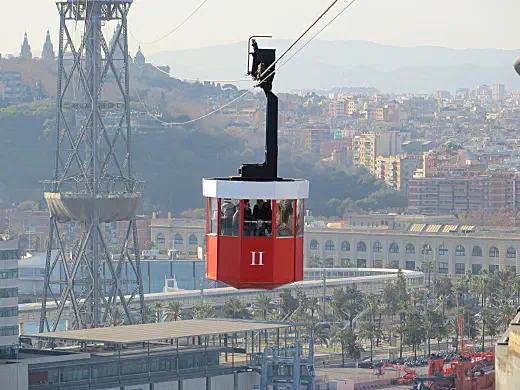
Cable car Port - Montjuïc
The cable car of the port runs a total of 1.292 meters, reaching an altitude of 70 meters.
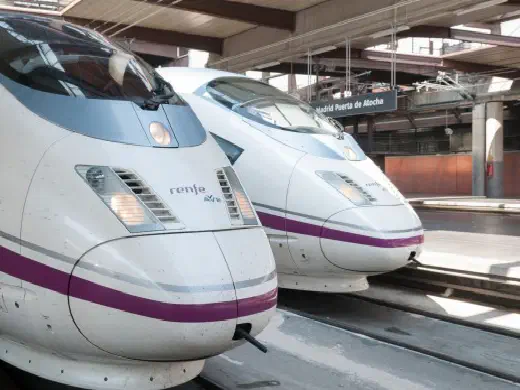
Train Stations in Barcelona
Barcelona has an extensive train network with different kinds of trains: long distance, middle-distance and short-distance.
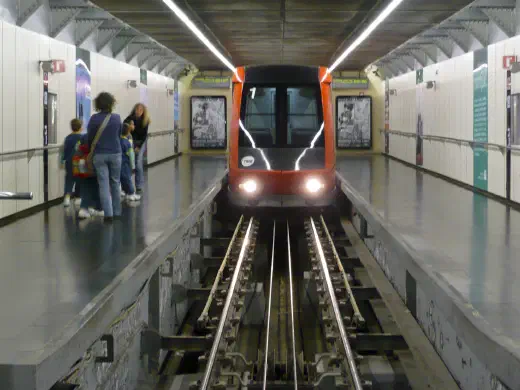
Funicular of Montjuïc
The Funicular of Montjuïc will bring you from the city center to the sports area and the Caste of Montjuïc. It is the fastest, most ecological and cheapest …
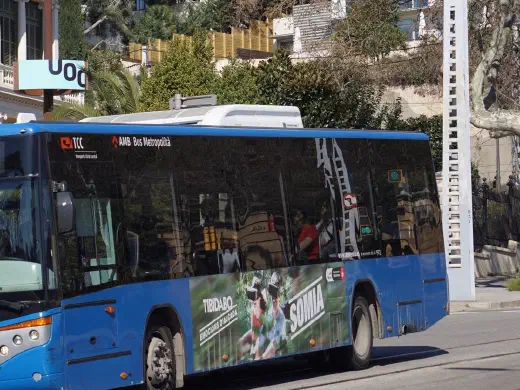
The Tibibus for Tibidabo
The Tibibus is the bus that takes you directly to the Tibidabo Amusement Park. The route of the Tibibus (T2A) starts at Plaça Catalunya and ends at the Plaça …